Martirio is easy to write off as the villain. This 60-minute lesson helps students argue something more interesting: that she is a victim of her society who becomes a verdugo, and that the question hasta qué punto is exactly where the marks are.
Students begin with Martirio's own words ("Dios me ha hecho débil y fea…") and build a picture of her across the three acts. They then plan and write a full essay of about 400 words on the question ¿Hasta qué punto es Martirio una víctima de la sociedad en La casa de Bernarda Alba?
What students cover
Martirio in five words: finding a quotation to prove each one
A quote bank of 13 key quotations and actions, organised by act, with what each one reveals
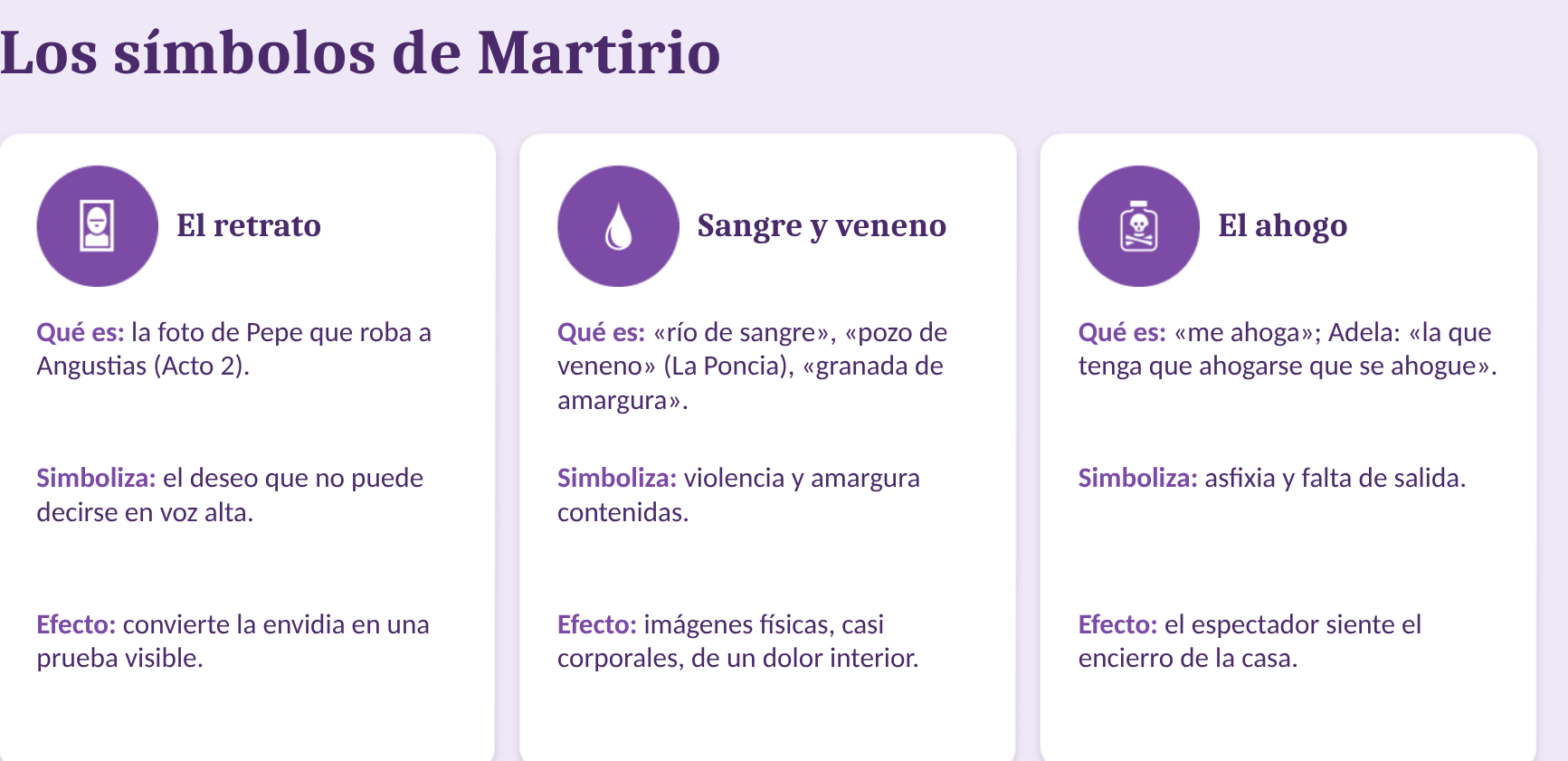
Martirio's symbols: the portrait, blood and poison, and suffocation
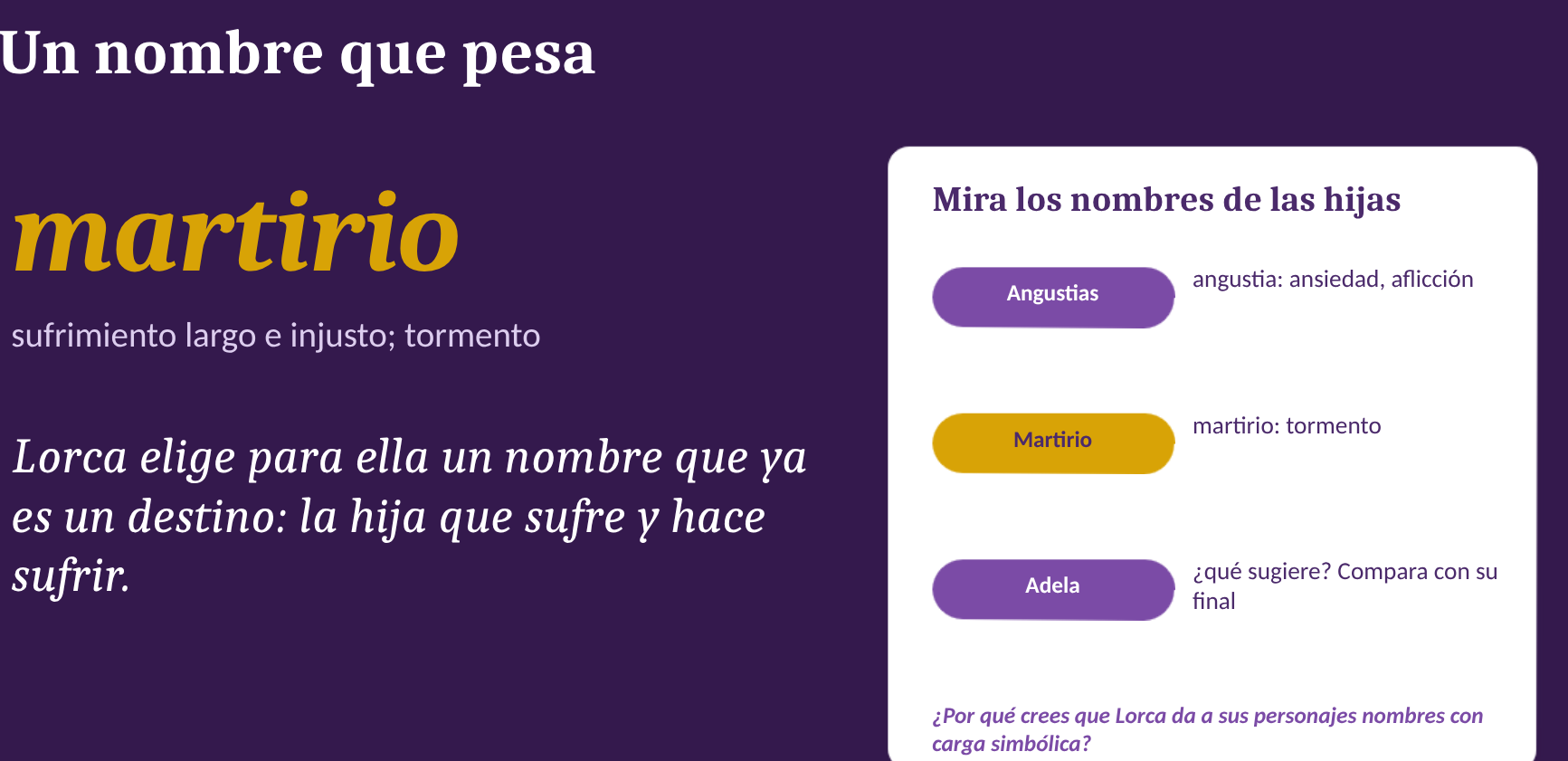
Adela and Martirio compared, then the "¿víctima, culpable o las dos cosas?" evidence task
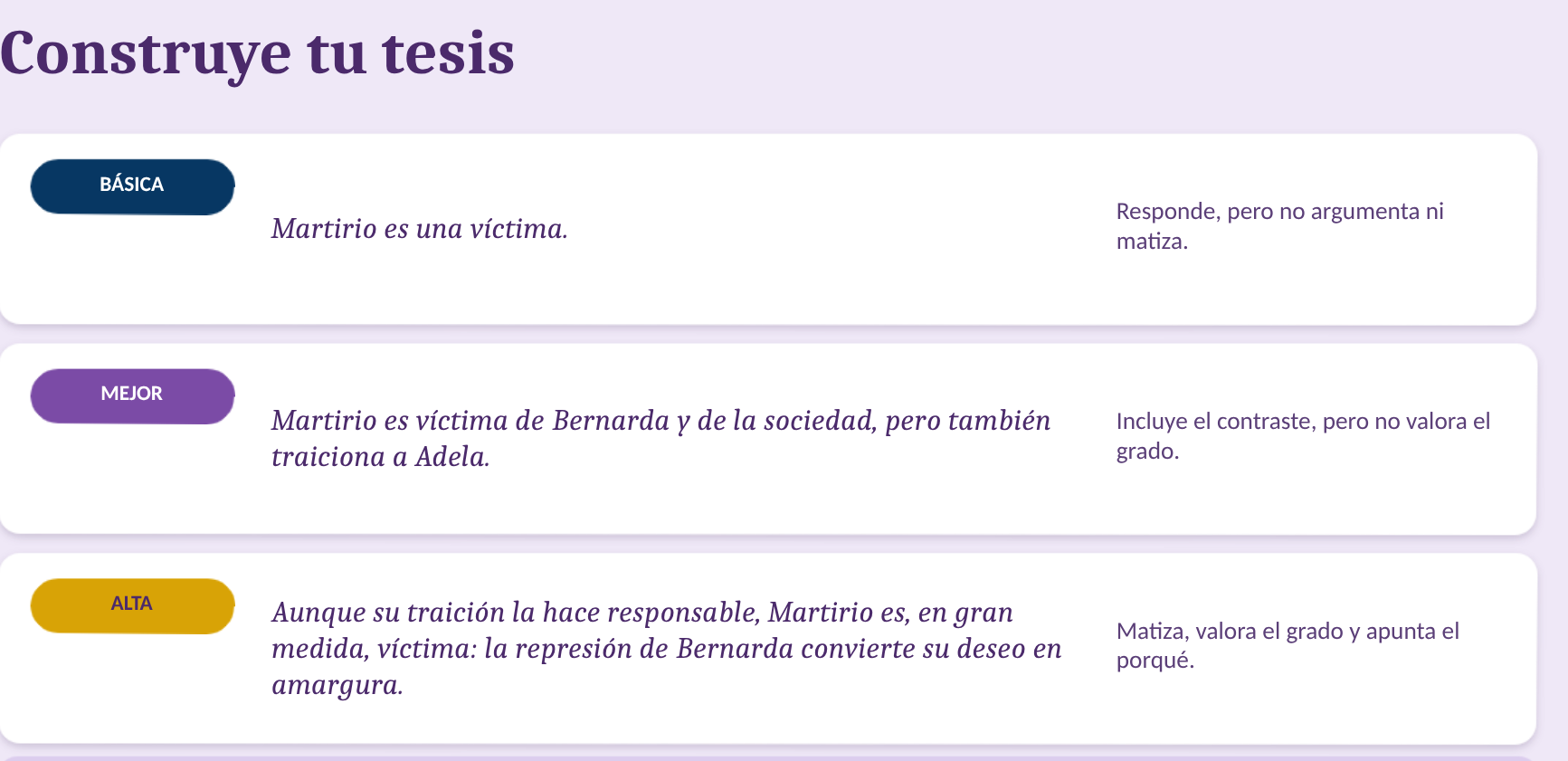
Planning a thesis with nuance and a full essay plan
A vocabulary and phrase bank for arguing, analysing quotations and concluding
A peer-review grid and a model essay of about 439 words to compare with their own
What's included
Teacher PowerPoint (18 slides) with a timed 60-minute plan, a thesis ladder from basic to best, model paragraphs, a live writing timer and speaker notes
Student PDF pack (10 pages) with the quote bank, symbols table, víctima/culpable task, planning frame, essay writing pages, self- and peer-assessment, exit ticket and model essay
Homework: finish the essay to about 400 words, colour-code PEA in two paragraphs, and compare with the model
Good to know
For Year 13 A Level Spanish students studying La casa de Bernarda Alba.
Adela is the character students most want to write about, and the one they most often describe instead of analyse. This 60-minute lesson takes them from "she rebels" to a clear, evidence-based argument about how Lorca presents her rebellion.
Students start with Adela's green dress in a house of mourning. They then trace her through all three acts, compare the colours Lorca uses, and test the idea of tragic irony: the more she rebels, the less free she becomes. The lesson ends with each student writing a PEA paragraph on a new quotation.
What students cover
Adela in five words, each backed by a quotation
Adela across three acts, with a rebeldía rating and a "rebellion vs real freedom" graph to draw
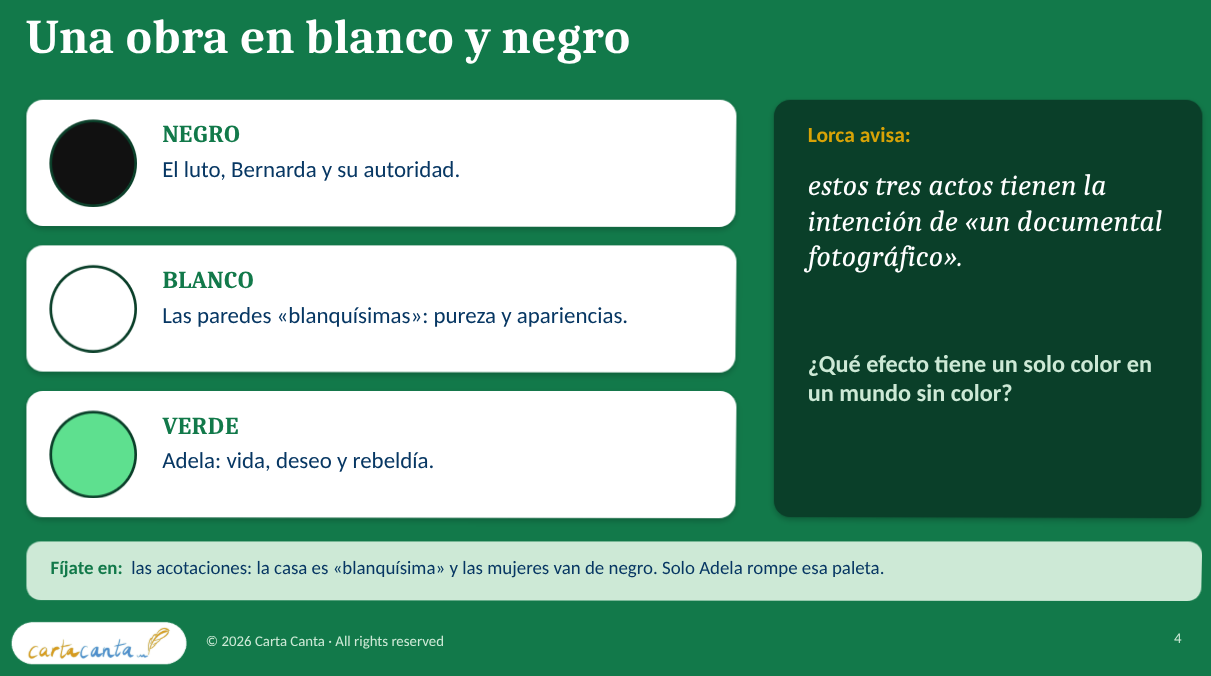
The symbols of the green dress, the fan and the vara, and why green can mean both life and death in Lorca
What we know about Lorca and Adela, and the critical debate about whether she reflects him
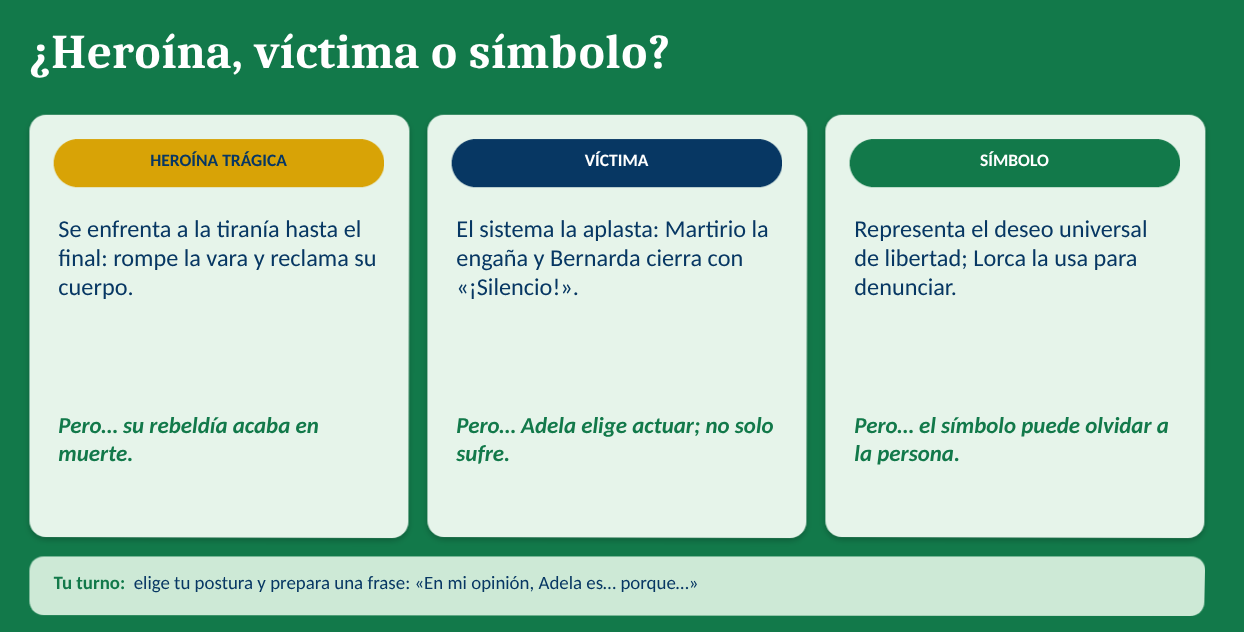
Heroína trágica, víctima or símbolo: choosing and defending a position
A phrase and vocabulary bank for describing, analysing and evaluating a character
What's included
Teacher PowerPoint (17 slides) with a timed 60-minute plan, model paragraph, discussion prompts and speaker notes
Student PDF pack (7 pages) with the warm-up, act-by-act table, symbols tasks, a Lorca and Adela page, vocabulary, PEA writing frame with checklist, and a model paragraph to colour-code
Exit ticket and homework: finish the PEA paragraph and find two Act 3 stage directions on colour, light or sound
Good to know
For Year 13 A Level Spanish students studying La casa de Bernarda Alba.nish students studying La casa de Bernarda Alba.
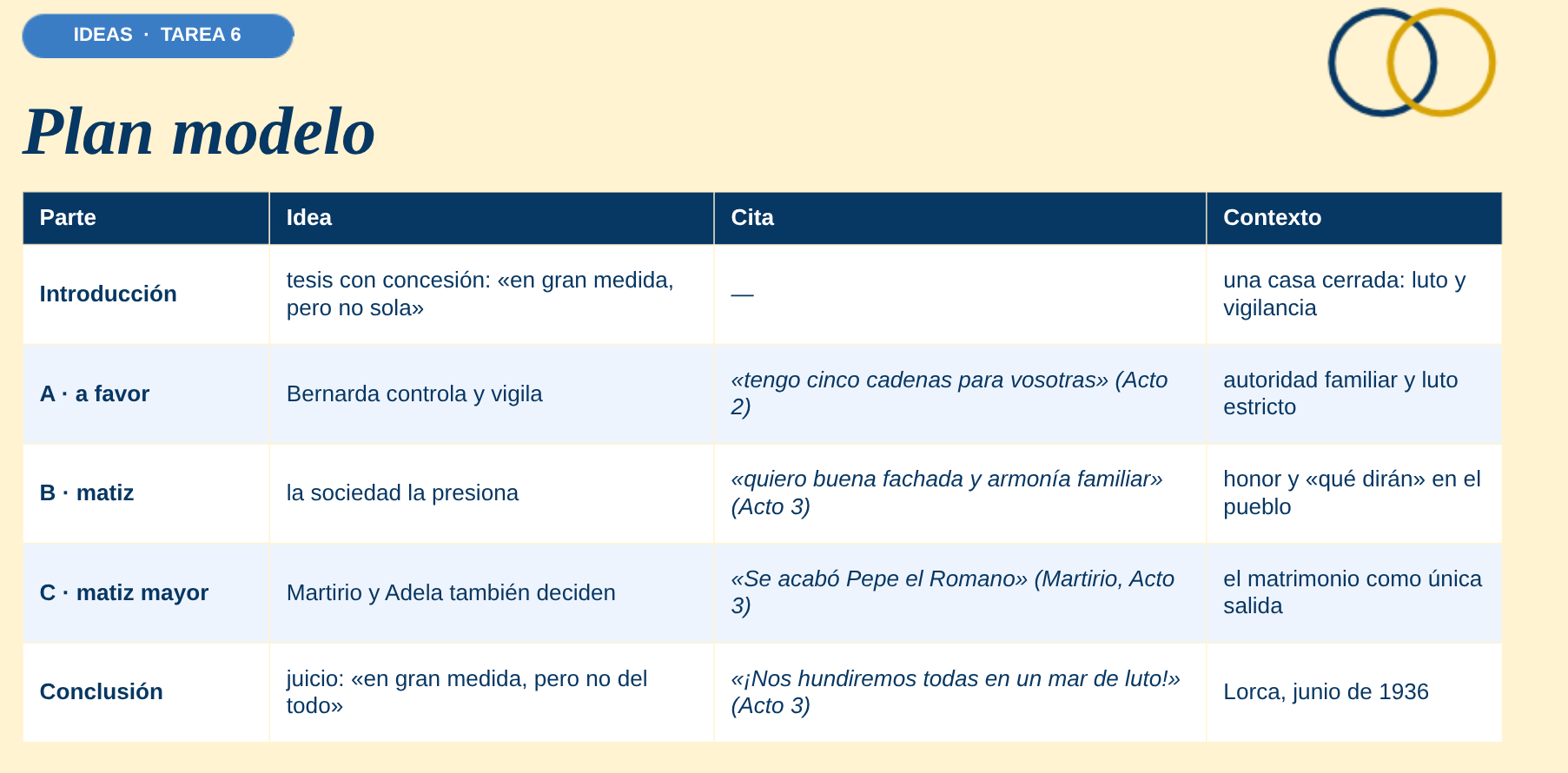
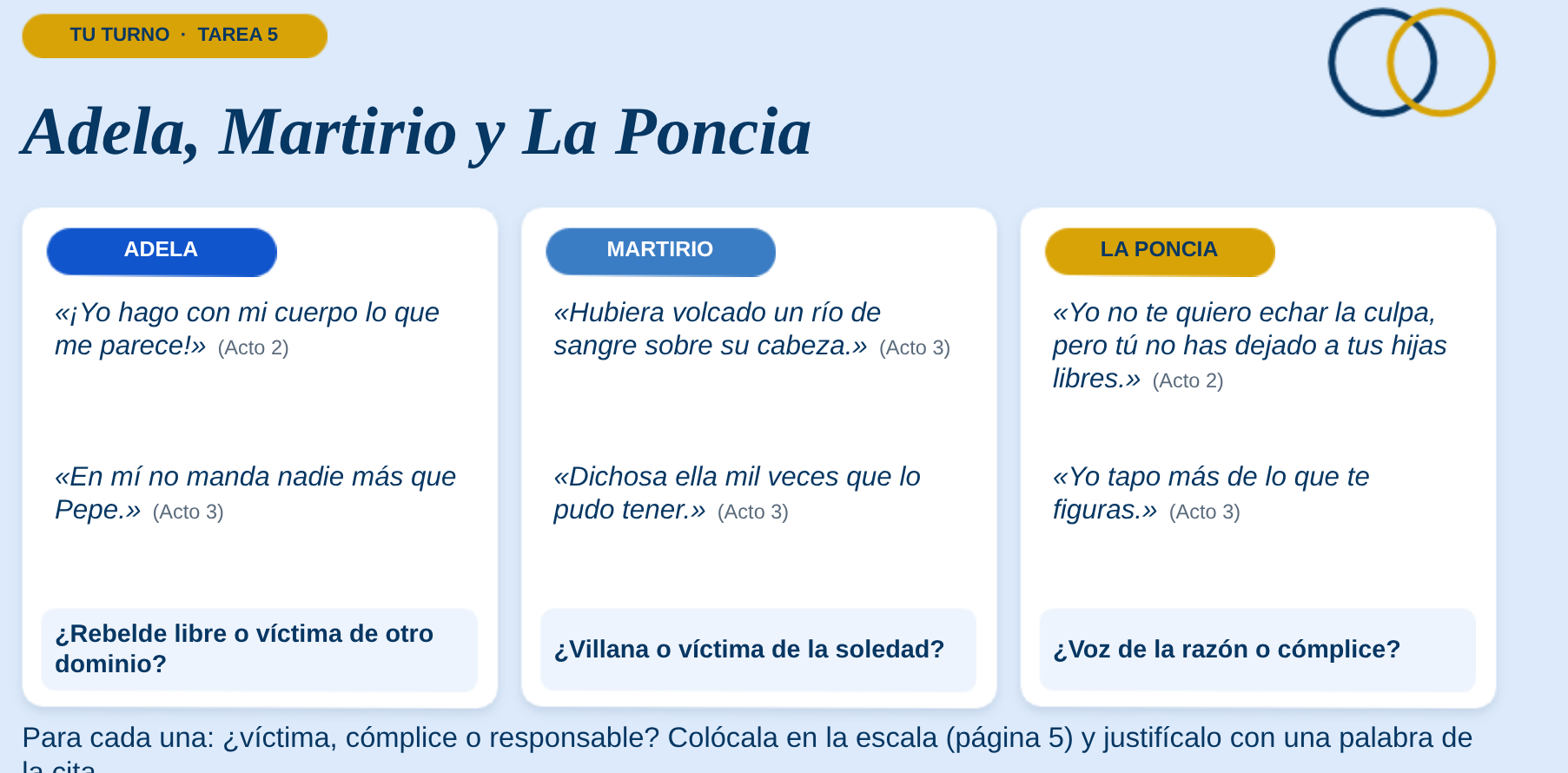
"Hasta qué punto" questions reward students who can weigh an argument, not just support it. This 60-minute lesson teaches them to take a position, concede what's fair, and use historical context with precision.
Students start with a quick "Sí, pero…" debate. They then learn how an evaluative question differs from the "how does Lorca present…" questions of earlier lessons. The question for the whole lesson is ¿Hasta qué punto es Bernarda la responsable de la tragedia final?
What students cover
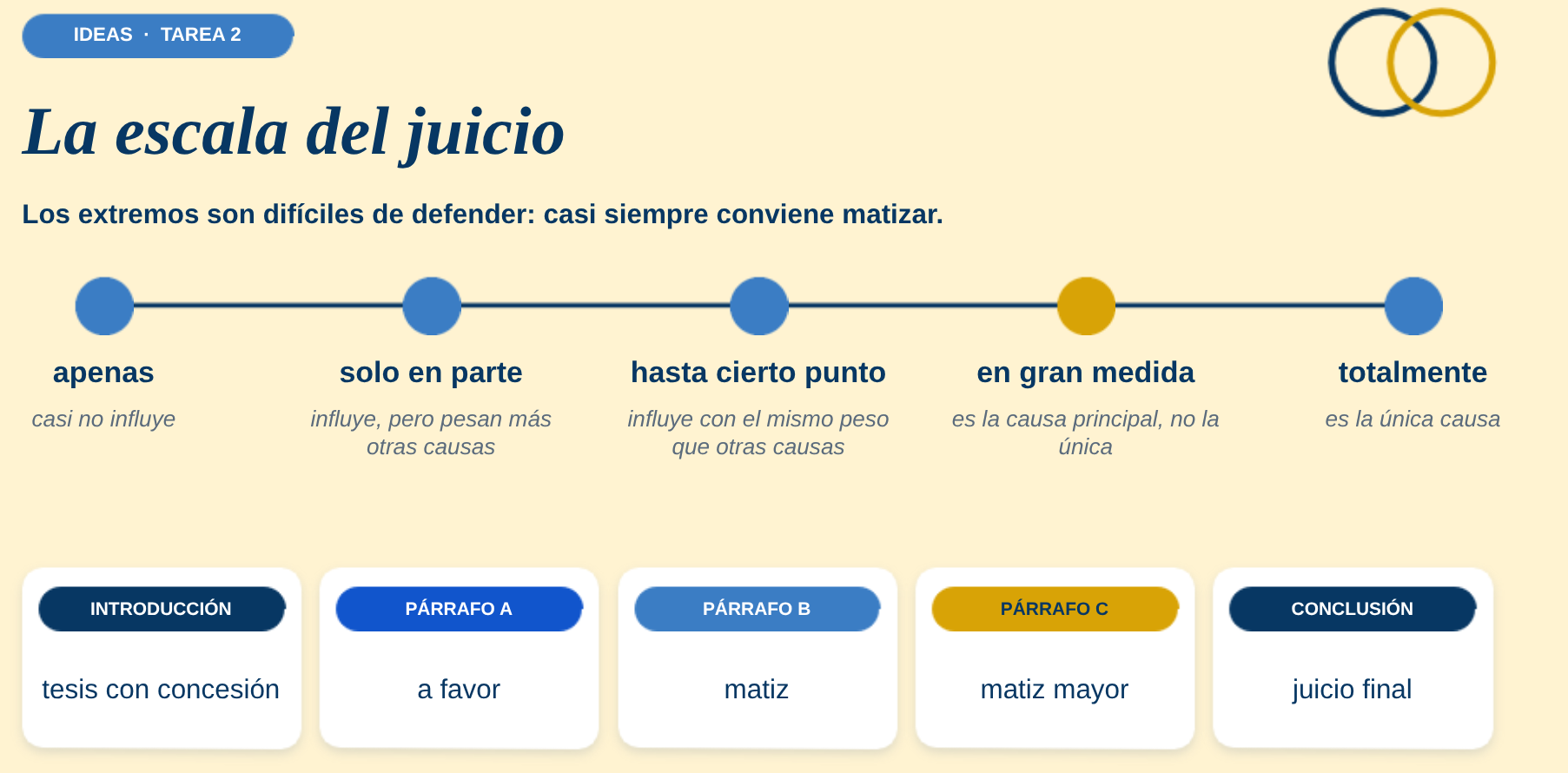
Reading the question and placing their answer on a judgement scale, from apenas to totalmente
Writing a thesis with concession (si bien, aunque, por mucho que)
Language for nuance: concession with indicative and subjunctive, certainty and doubt, and more precise verbs
A context bank of eight points, used with a three-step formula: context, quotation, effect
Judging the responsibility of Adela, Martirio and La Poncia
Planning and writing an introduction and a conclusion that give a graded judgement
What's included
Teacher PowerPoint (22 slides) with student-turn and ideas slides, a model plan, a model introduction and conclusion, a model nuance paragraph and speaker notes
Student PDF pack (7 pages) with the judgement scale, grammar tasks, the context bank, character responsibility grids, an evaluative planning frame and a self-check list
Homework: paragraph C of the plan (the daughters), about 100 words, with one integrated context point and two concession structures
An exit ticket: a one-sentence judgement using si bien or aunque
Good to know
For Year 13 A Level Spanish students studying La casa de Bernarda Alba.
Lesson 4 in the Cartacanta A Level Spanish essay-writing series, following the PEA method and symbols lessons.
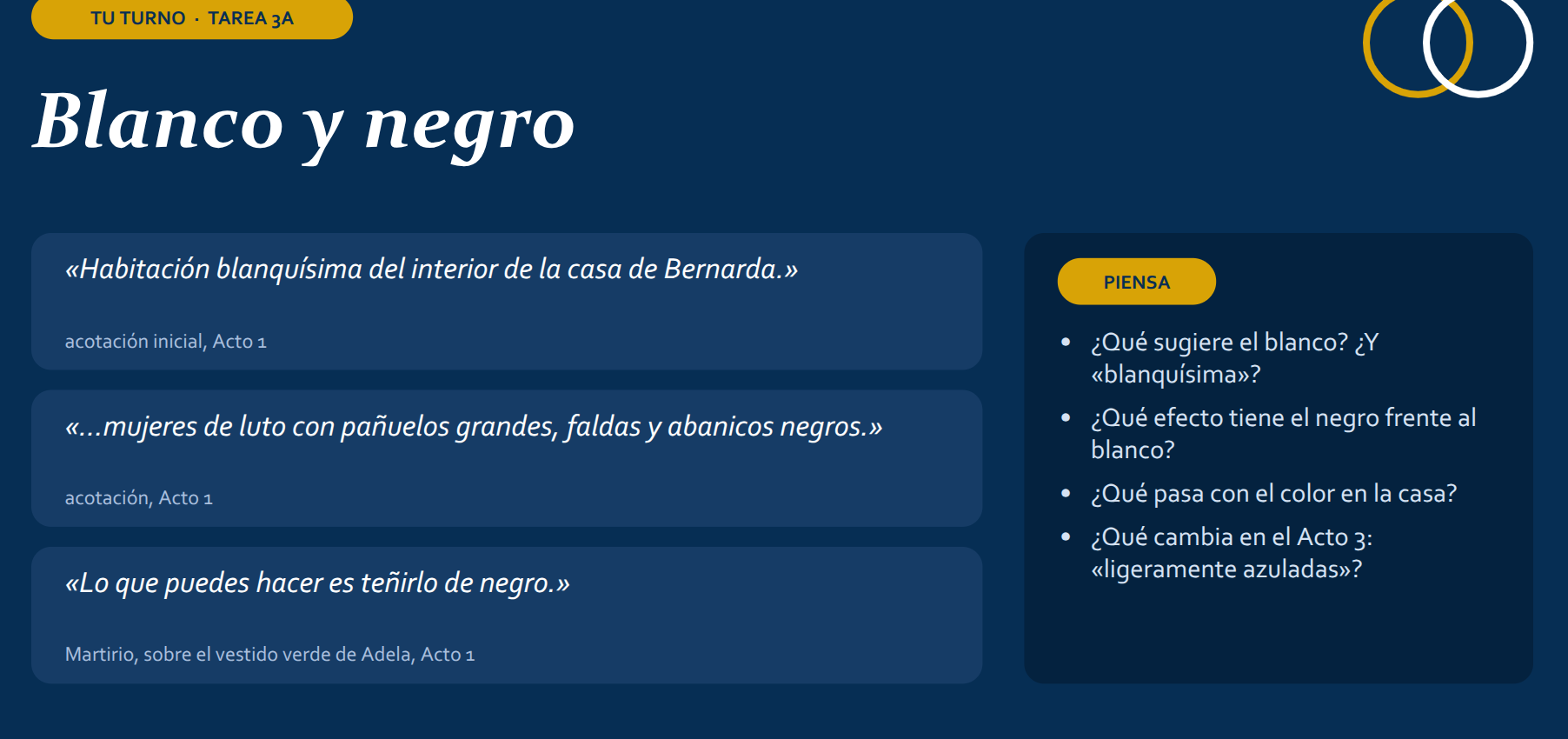
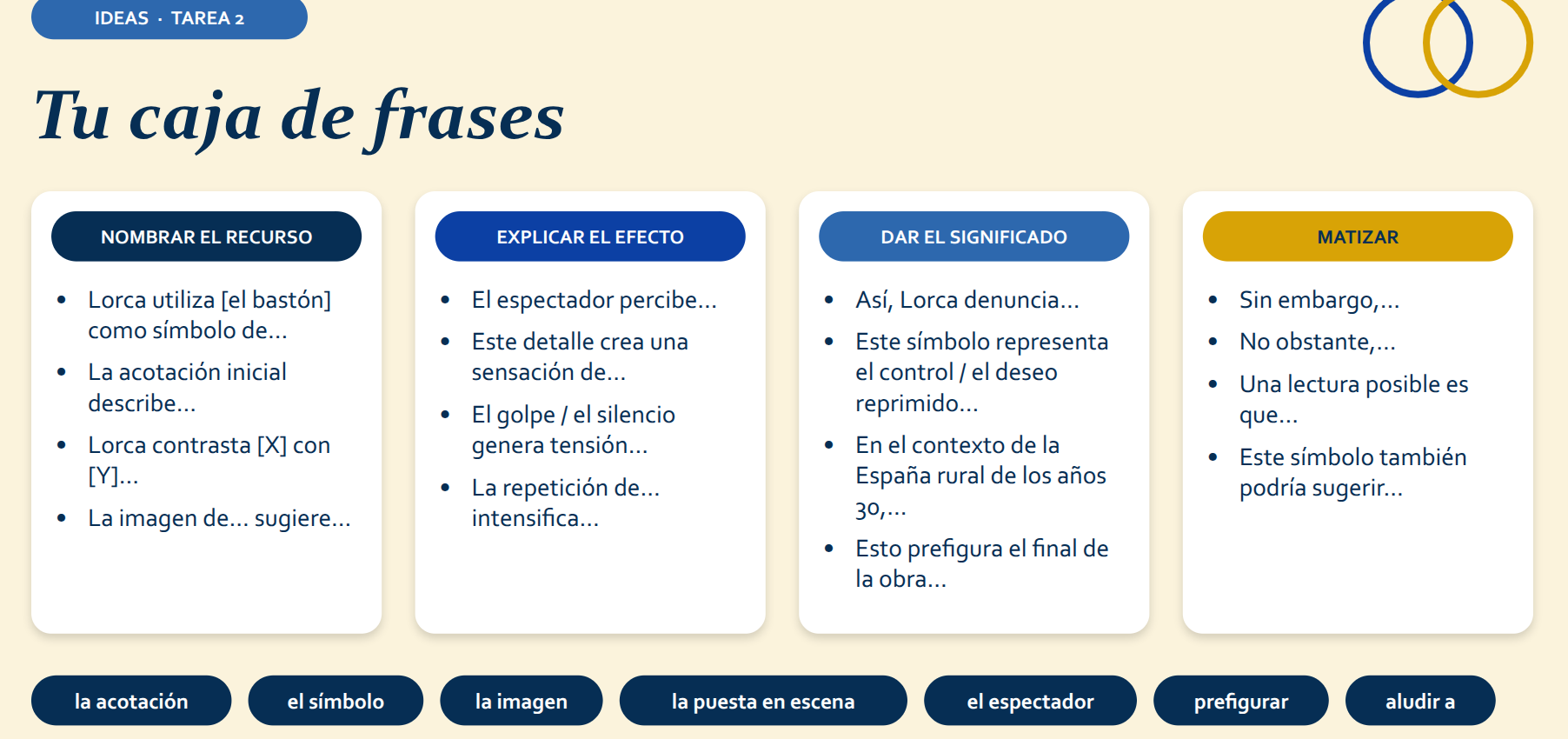
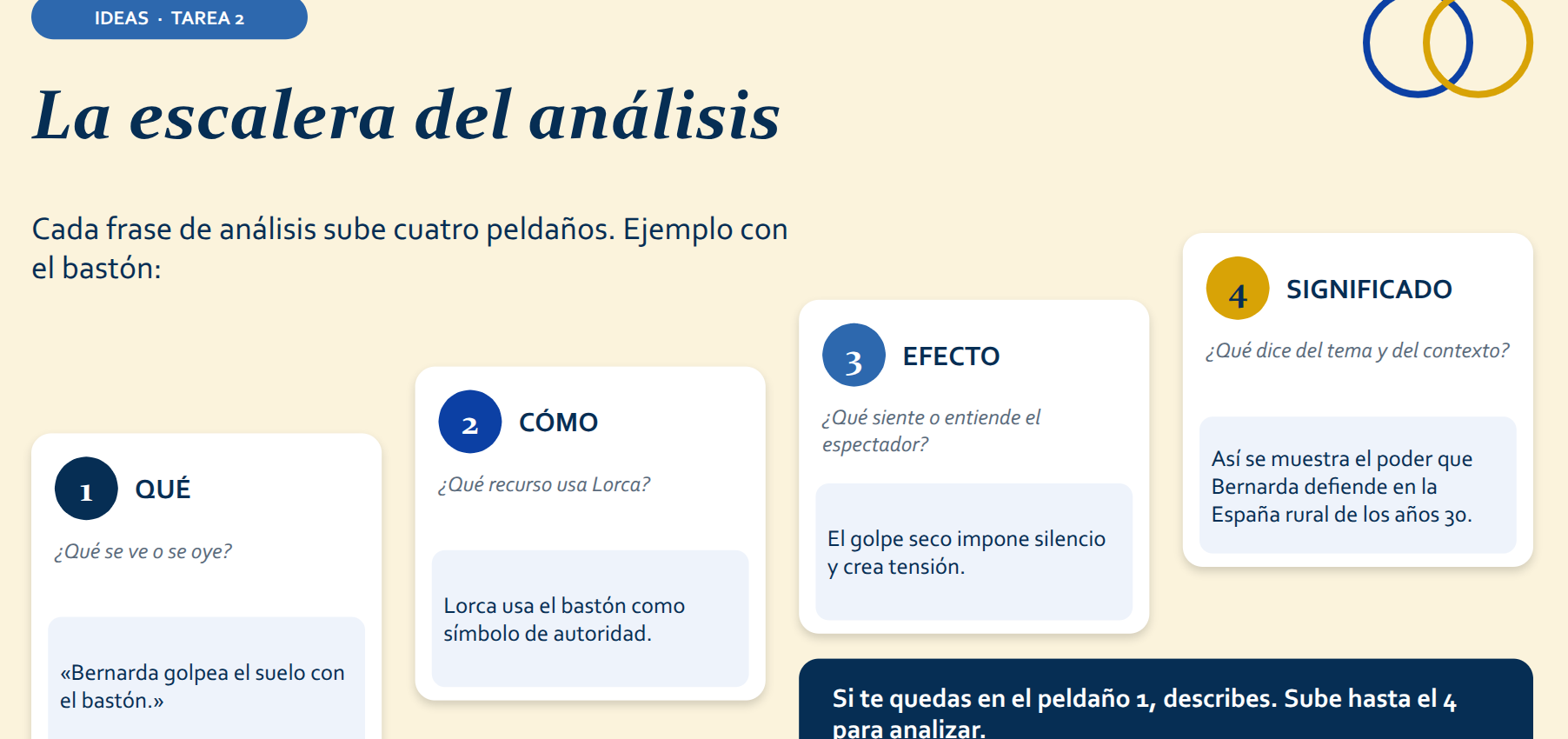
Students can say that Bernarda controls her daughters. This lesson teaches them to show how Lorca makes the audience feel it, which is where the higher marks are.
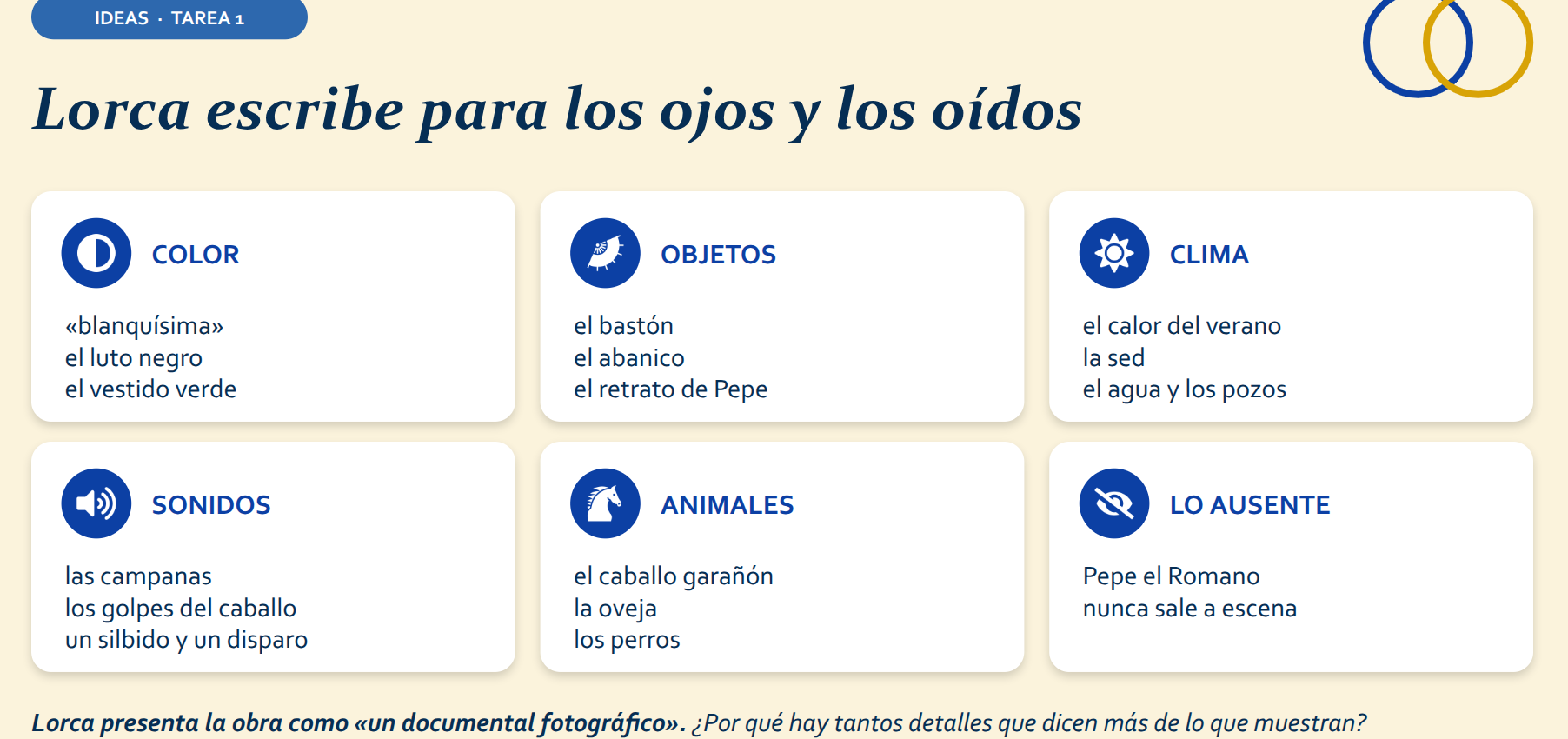
This 60-minute lesson moves students from describing what happens on stage to analysing what it means. They work through Lorca's colours, objects, animals and absences, with the quotations and stage directions in front of them. A four-step "analysis ladder" (qué, cómo, efecto, significado) gives them a method they can reuse in any essay.
What students cover
Colour and atmosphere: the white room, black mourning, heat, thirst and water that doesn't run
Objects: the bastón, the abanico and Pepe's portrait
The living and the absent: the caballo garañón, María Josefa's oveja, and Pepe who is never seen
A symbols bank that doubles as a revision map
What's included
Teacher PowerPoint (21 slides) with student-turn and ideas slides, a model paragraph, before-and-after sentence upgrades and speaker notes with prompts and answers
Student PDF pack (6 pages) with the analysis ladder, a phrase bank, quotation-based tasks for each symbol, a symbols bank grid, sentence-improvement tasks and an exit ticket
Homework: a PEA paragraph on a new symbol, answering "¿Cómo presenta Lorca el deseo reprimido de las hijas?"
Good to know
For Year 13 A Level Spanish students studying La casa de Bernarda Alba.
Lesson 3 in the Carta Canta A Level Spanish essay-writing series. It builds on the PEA method from lessons 1 and 2 and can be taught on its own to students who already write PEA paragraphs.
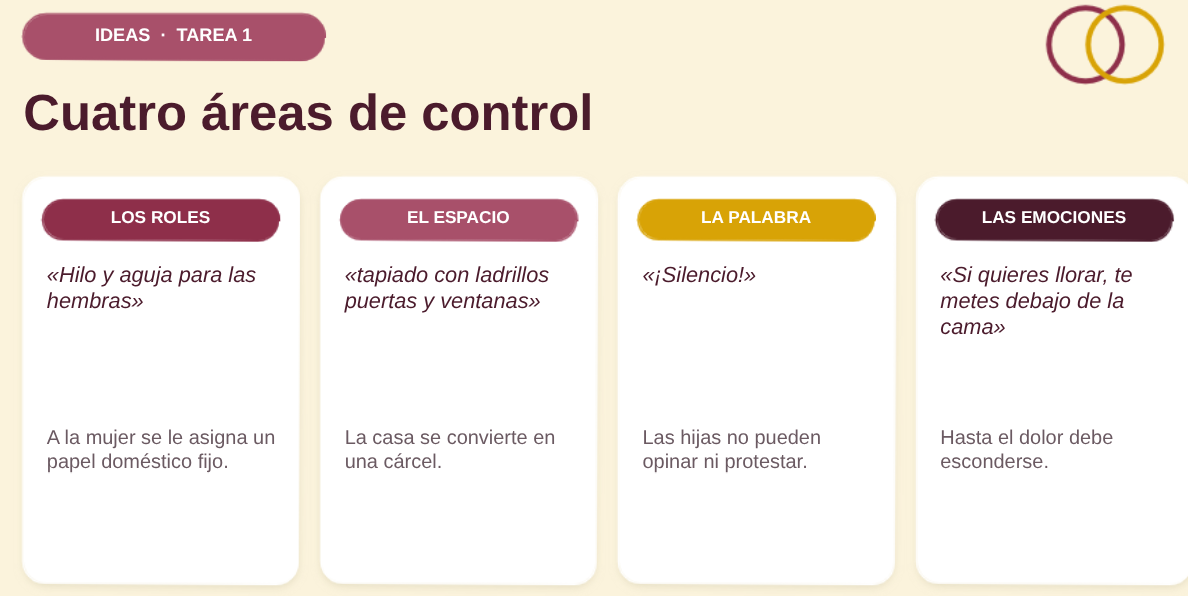
Lesson 2 of the A Level Spanish essay-writing series. Students go from one PEA paragraph to a complete 400-word essay on La casa de Bernarda Alba: analysing the question, writing a thesis, planning three points and drafting. Includes a 60-minute teacher PowerPoint and a printable 6-page worksheet pack.
Take your Year 13 students from a single paragraph to a full, well-argued essay in Spanish.
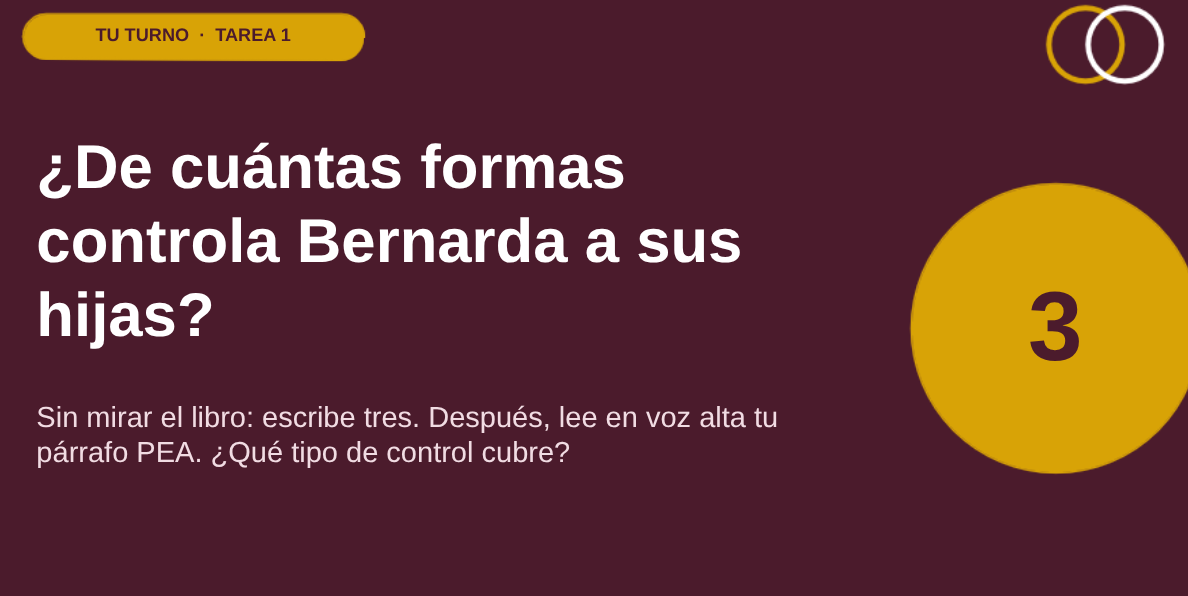
In lesson 1 (downloadable for free), students learn the PEA method. In this lesson they use it to build a whole essay on one question: ¿Cómo presenta Lorca el control de Bernarda sobre sus hijas? They break the question down, write a thesis, plan three points and draft the essay, with models to compare against only after they've had a go.
What's included
23-slide teacher PowerPoint for a 60-minute lesson:
a warm-up and question analysis
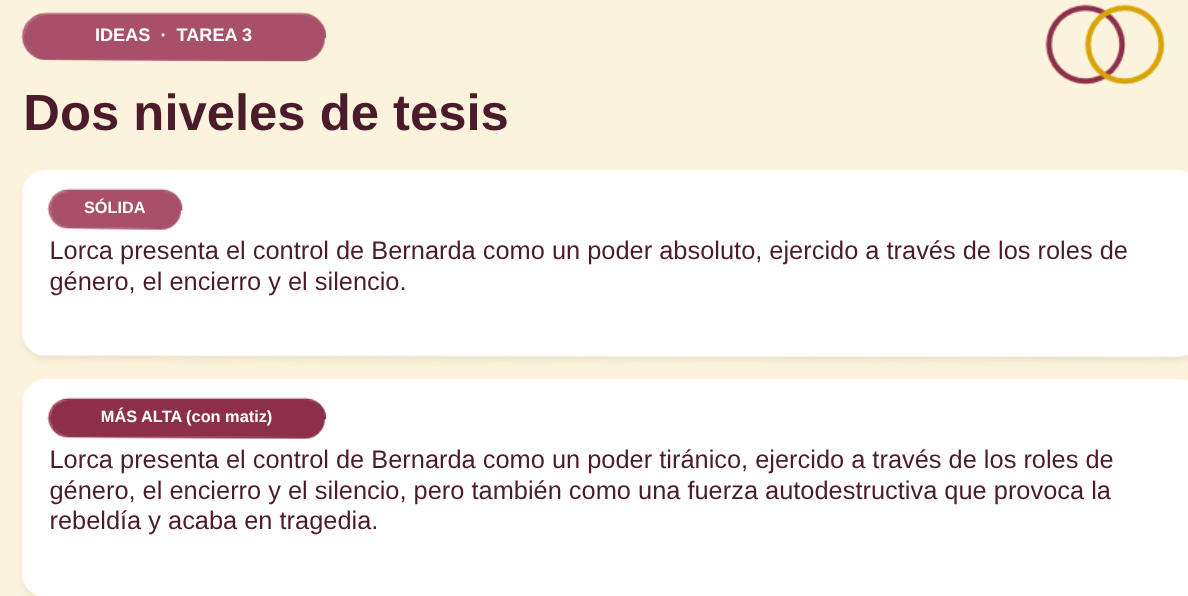
thesis writing, with two model levels (solid and higher)
three model body paragraphs (roles, space, word and emotions)
model introduction and conclusion
a "level up" slide (better verbs, embedded quotations, adding nuance)
a stretch task
teacher notes on every slide, plus a complete model essay in the final slide's notes
6-page student worksheet pack (PDF):
session plan and warm-up
question analysis and thesis builder
a planning grid (point, quote, technique, effect, context)
a quote bank of 10 key quotations with space to analyse each
scaffolded writing pages for the introduction, three body paragraphs and conclusion
a self-check list with "level up" targets and an extension challenge
Suitable for: A Level Spanish (Year 12–13) literature teaching, one-to-one or small-group tutoring, whole-class lessons and independent study. It works best after lesson 1 (the PEA method), but students who already know PEA can use it on its own.
Format: PowerPoint (.pptx) and printable PDF.
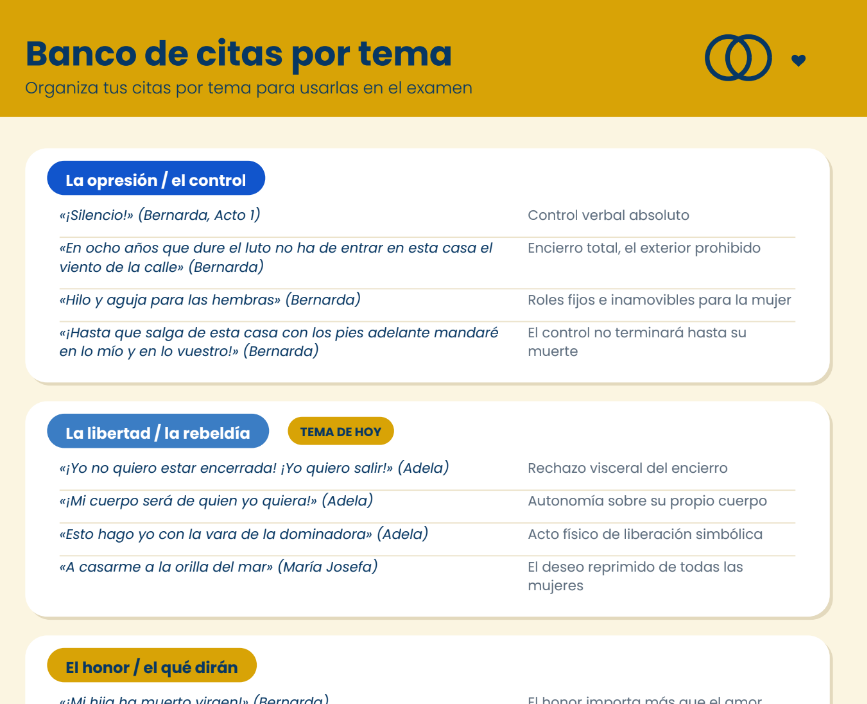
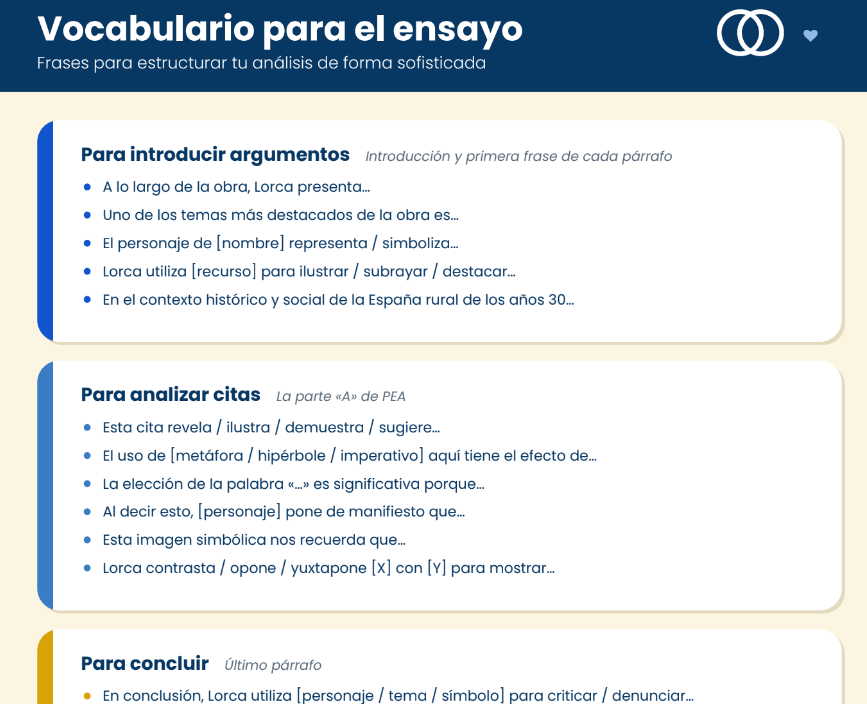
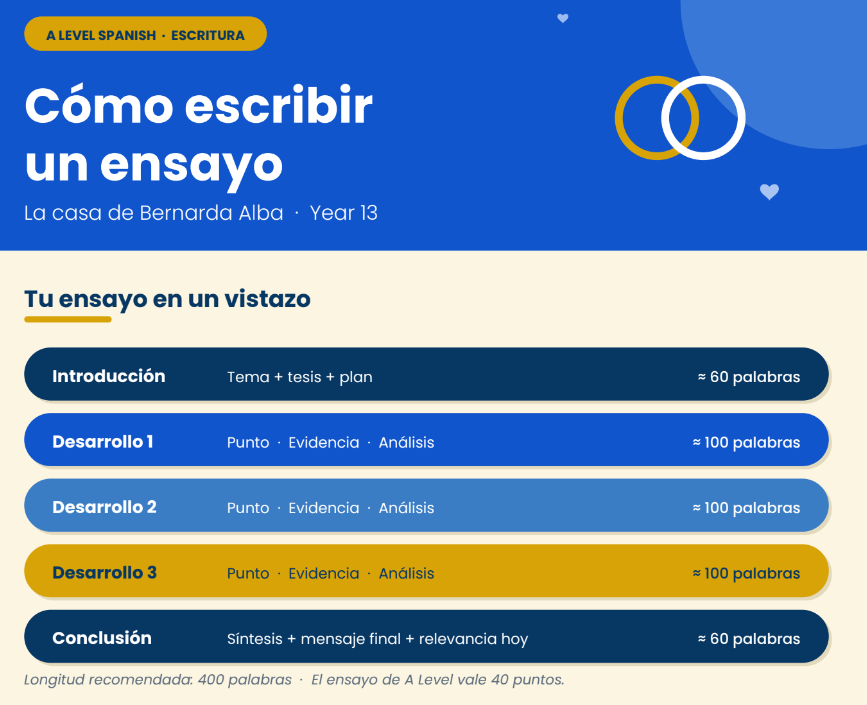
A complete first lesson on writing A Level Spanish literature essays, using La casa de Bernarda Alba. Includes a 60-minute teacher PowerPoint and a printable student pack with a model essay, quote bank and sentence bank.
Teach your Year 13 students how to write a literary essay in Spanish, step by step.
This ready-to-teach lesson uses one theme, freedom in La casa de Bernarda Alba. Students see the structure of an A Level essay, learn the PEA method (Punto, Evidencia, Análisis), and write their first analytical paragraph by the end of the hour.
What's included
18-slide teacher PowerPoint for a 60-minute lesson, with a starter, live PEA modelling, a colour-coding task, a phrase hunt, independent writing, peer feedback, an exit ticket and homework. Speaker notes are included on every slide.
5-page student pack (PDF):
essay structure and PEA at a glance
a Spanish sentence bank for introducing arguments, analysing quotes and concluding
connectors and literary vocabulary
a quote bank organised by theme: oppression, freedom, honour and double standards
an annotated ~440-word model essay
a scaffolded PEA paragraph with a checklist and an extension challenge
Suitable for: A Level Spanish (Year 12–13) literature teaching, classroom use, cover lessons and independent study.
Format: PowerPoint (.pptx) and printable PDF.
No results match your search. Try removing a few filters.

