

 Image 1 of 4
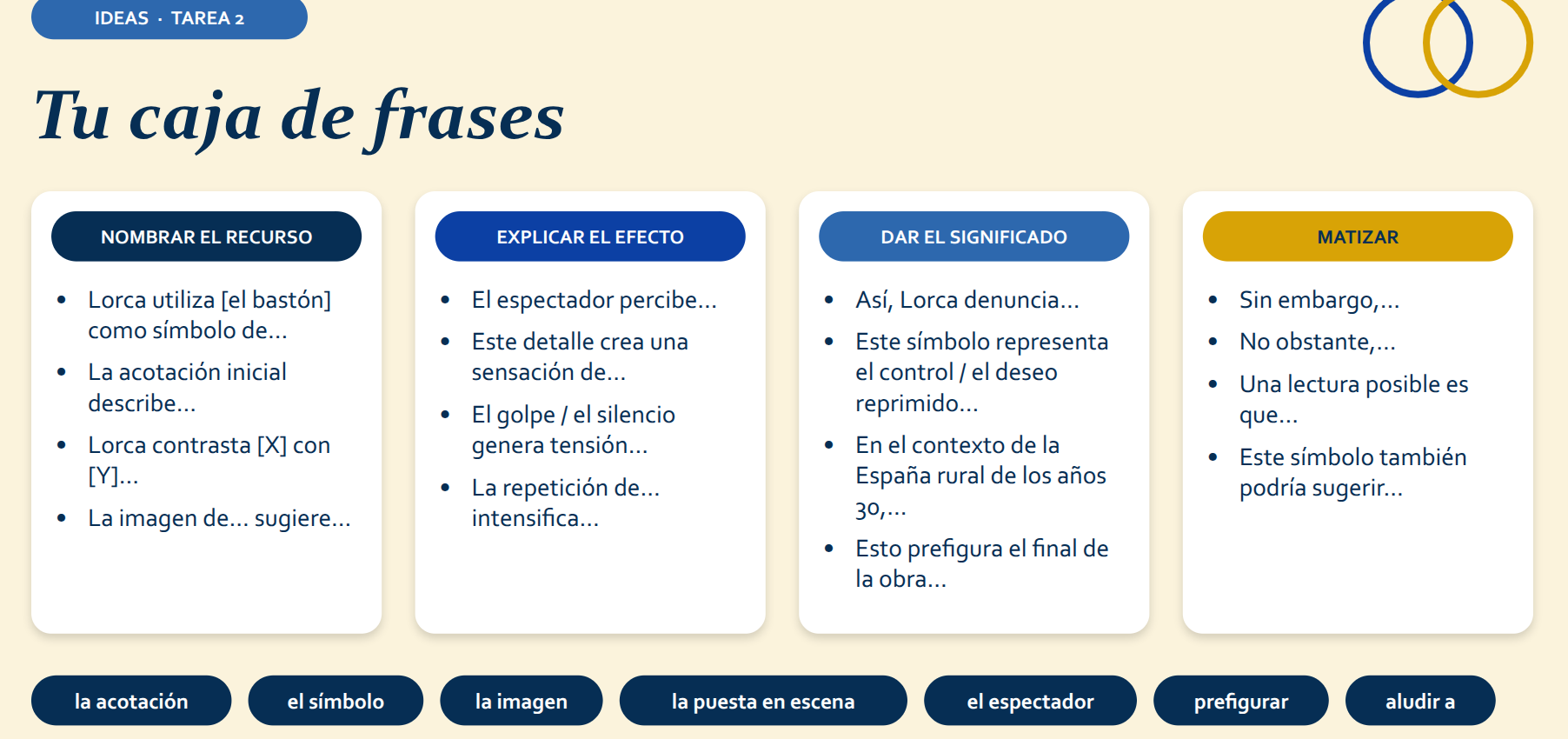 Image 2 of 4
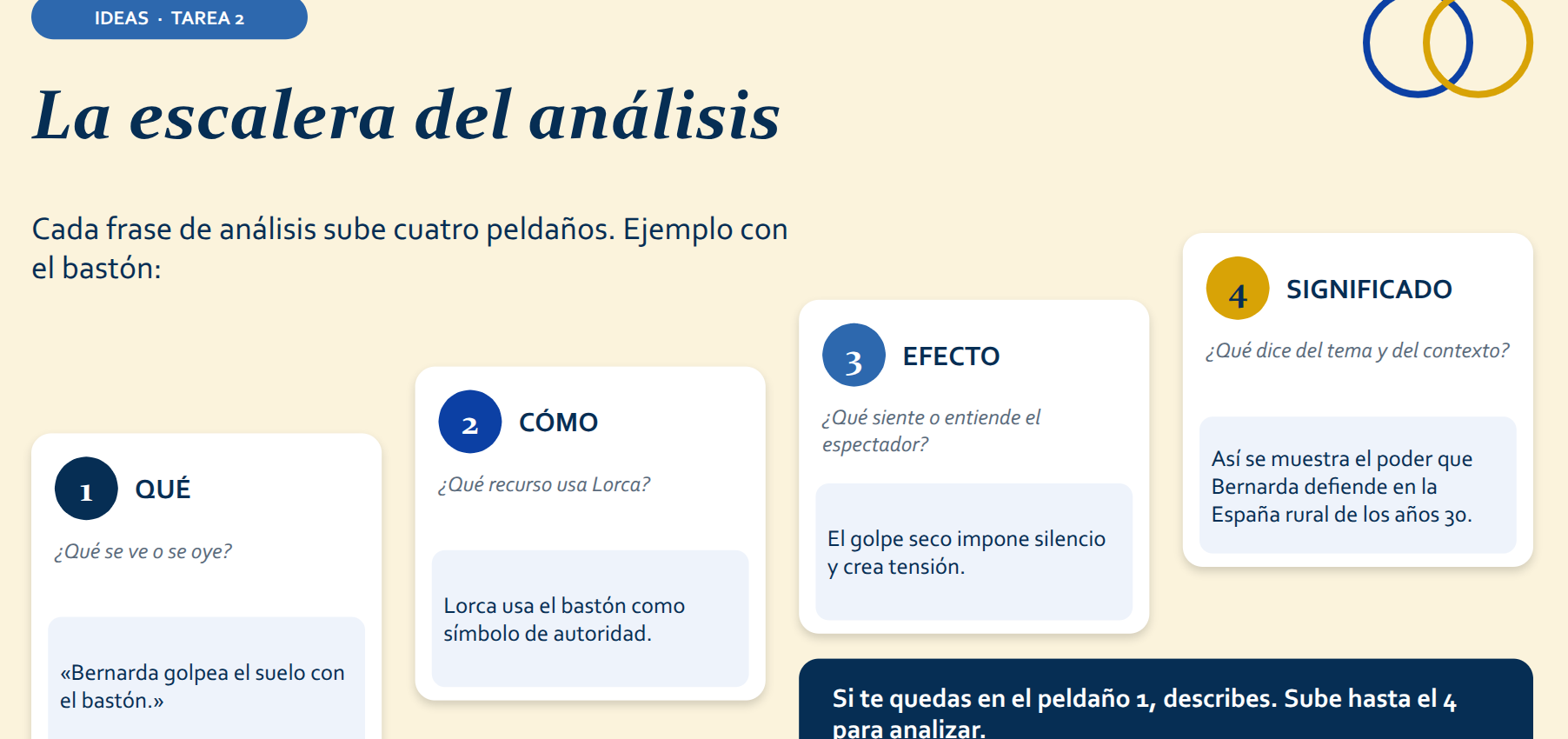 Image 3 of 4
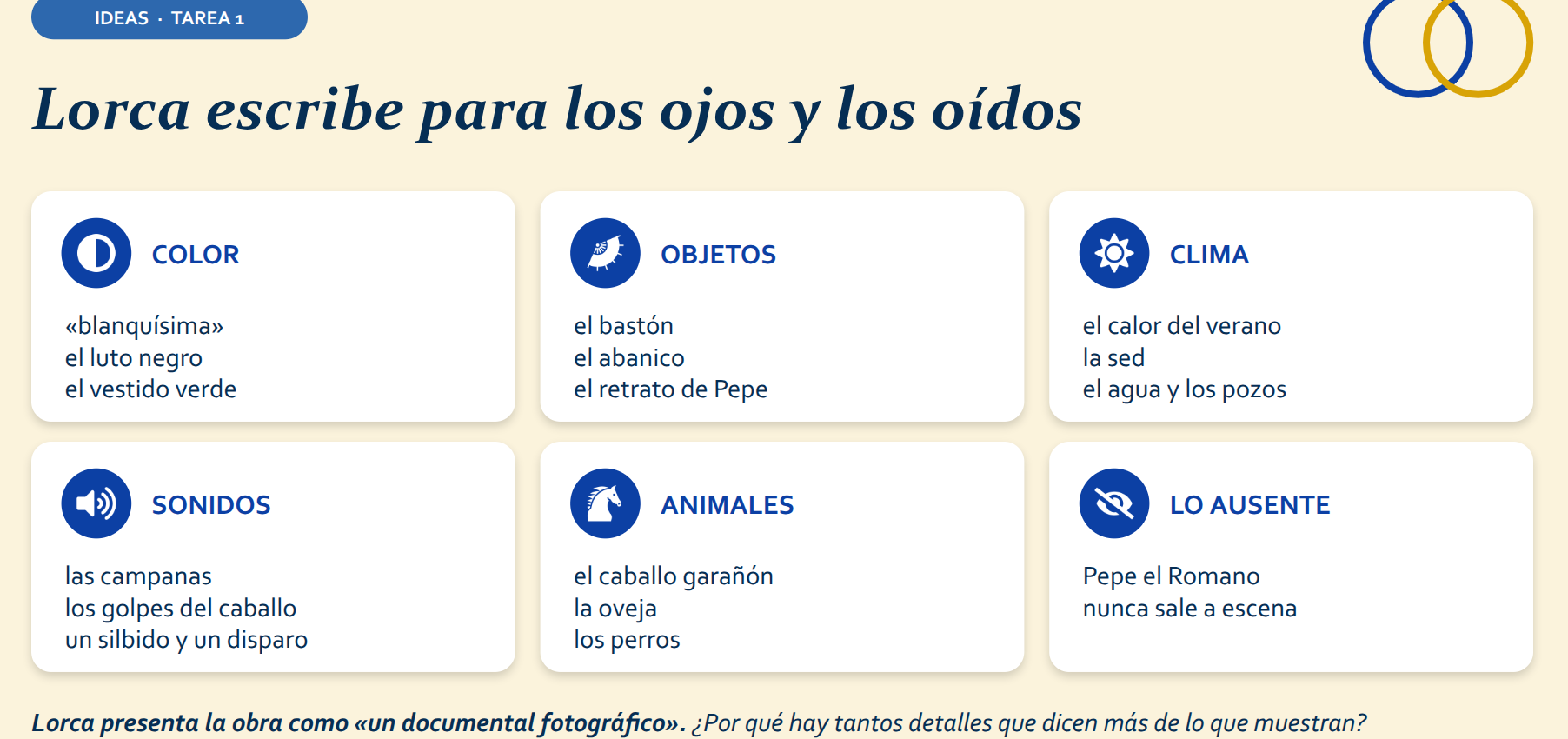 Image 4 of 4
Students can say that Bernarda controls her daughters. This lesson teaches them to show how Lorca makes the audience feel it, which is where the higher marks are.
This 60-minute lesson moves students from describing what happens on stage to analysing what it means. They work through Lorca's colours, objects, animals and absences, with the quotations and stage directions in front of them. A four-step "analysis ladder" (qué, cómo, efecto, significado) gives them a method they can reuse in any essay.
What students cover
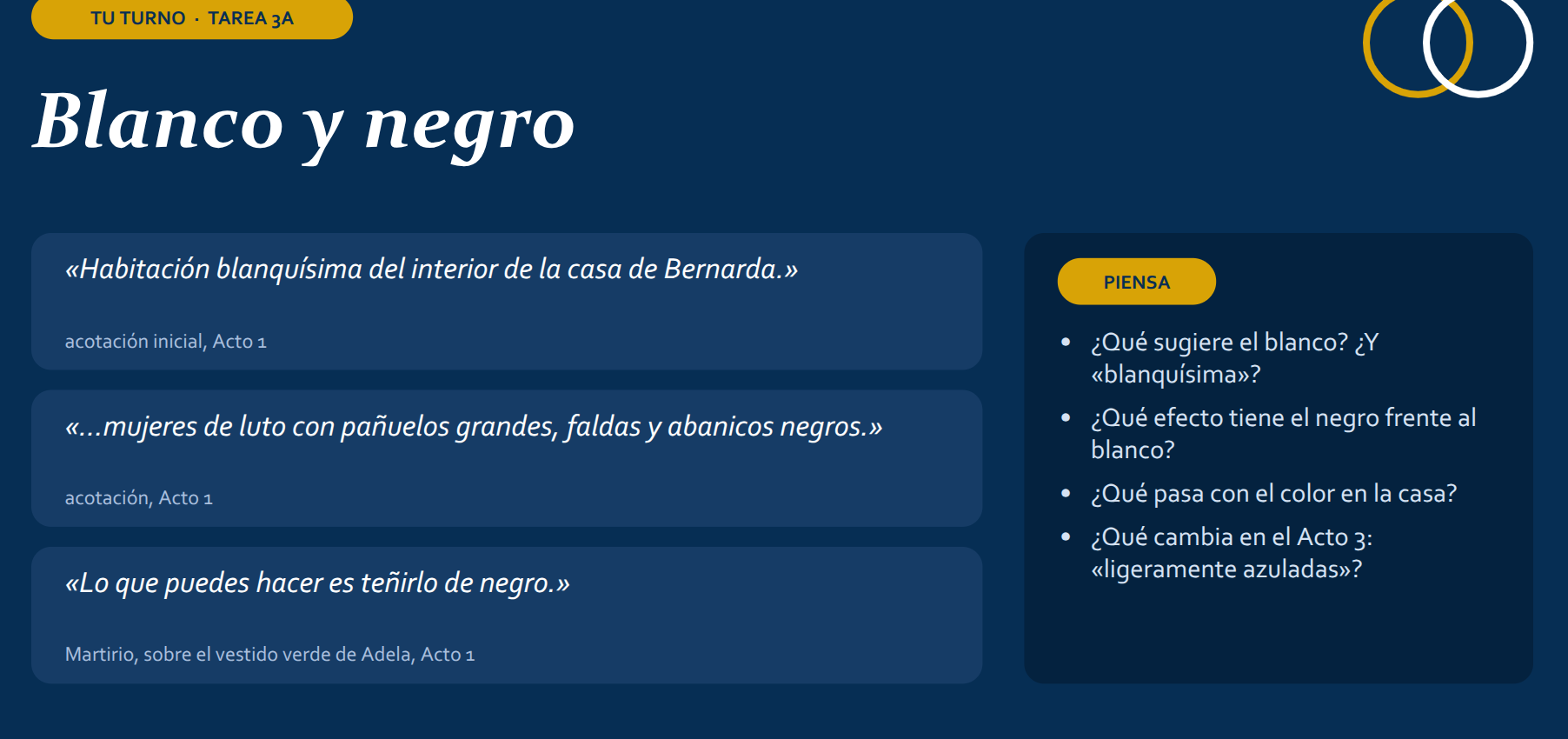
Colour and atmosphere: the white room, black mourning, heat, thirst and water that doesn't run
Objects: the bastón, the abanico and Pepe's portrait
The living and the absent: the caballo garañón, María Josefa's oveja, and Pepe who is never seen
A symbols bank that doubles as a revision map
What's included
Teacher PowerPoint (21 slides) with student-turn and ideas slides, a model paragraph, before-and-after sentence upgrades and speaker notes with prompts and answers
Student PDF pack (6 pages) with the analysis ladder, a phrase bank, quotation-based tasks for each symbol, a symbols bank grid, sentence-improvement tasks and an exit ticket
Homework: a PEA paragraph on a new symbol, answering "¿Cómo presenta Lorca el deseo reprimido de las hijas?"
Good to know
For Year 13 A Level Spanish students studying La casa de Bernarda Alba.
Lesson 3 in the Carta Canta A Level Spanish essay-writing series. It builds on the PEA method from lessons 1 and 2 and can be taught on its own to students who already write PEA paragraphs.
Students can say that Bernarda controls her daughters. This lesson teaches them to show how Lorca makes the audience feel it, which is where the higher marks are.
This 60-minute lesson moves students from describing what happens on stage to analysing what it means. They work through Lorca's colours, objects, animals and absences, with the quotations and stage directions in front of them. A four-step "analysis ladder" (qué, cómo, efecto, significado) gives them a method they can reuse in any essay.
What students cover
Colour and atmosphere: the white room, black mourning, heat, thirst and water that doesn't run
Objects: the bastón, the abanico and Pepe's portrait
The living and the absent: the caballo garañón, María Josefa's oveja, and Pepe who is never seen
A symbols bank that doubles as a revision map
What's included
Teacher PowerPoint (21 slides) with student-turn and ideas slides, a model paragraph, before-and-after sentence upgrades and speaker notes with prompts and answers
Student PDF pack (6 pages) with the analysis ladder, a phrase bank, quotation-based tasks for each symbol, a symbols bank grid, sentence-improvement tasks and an exit ticket
Homework: a PEA paragraph on a new symbol, answering "¿Cómo presenta Lorca el deseo reprimido de las hijas?"
Good to know
For Year 13 A Level Spanish students studying La casa de Bernarda Alba.
Lesson 3 in the Carta Canta A Level Spanish essay-writing series. It builds on the PEA method from lessons 1 and 2 and can be taught on its own to students who already write PEA paragraphs.